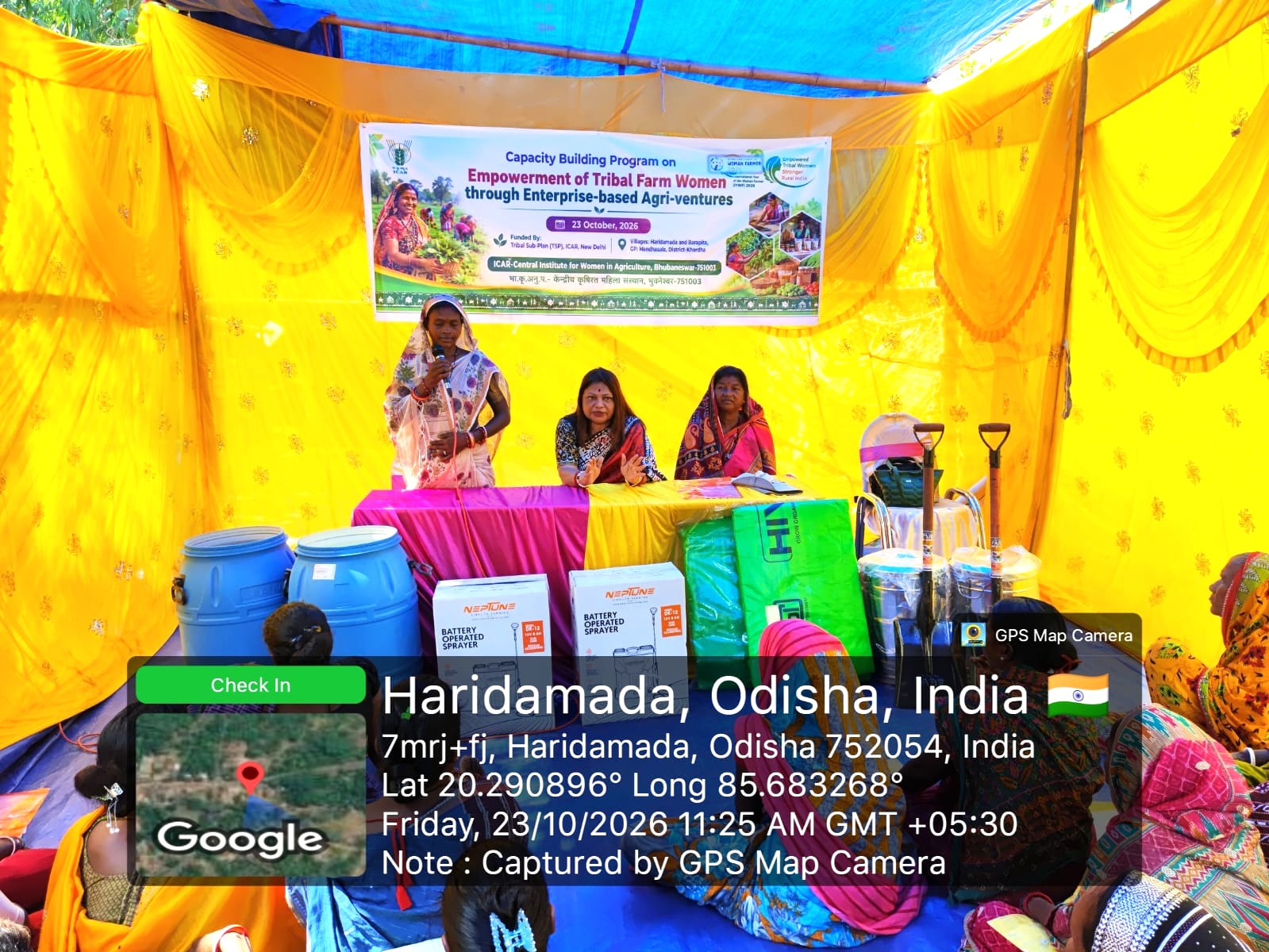
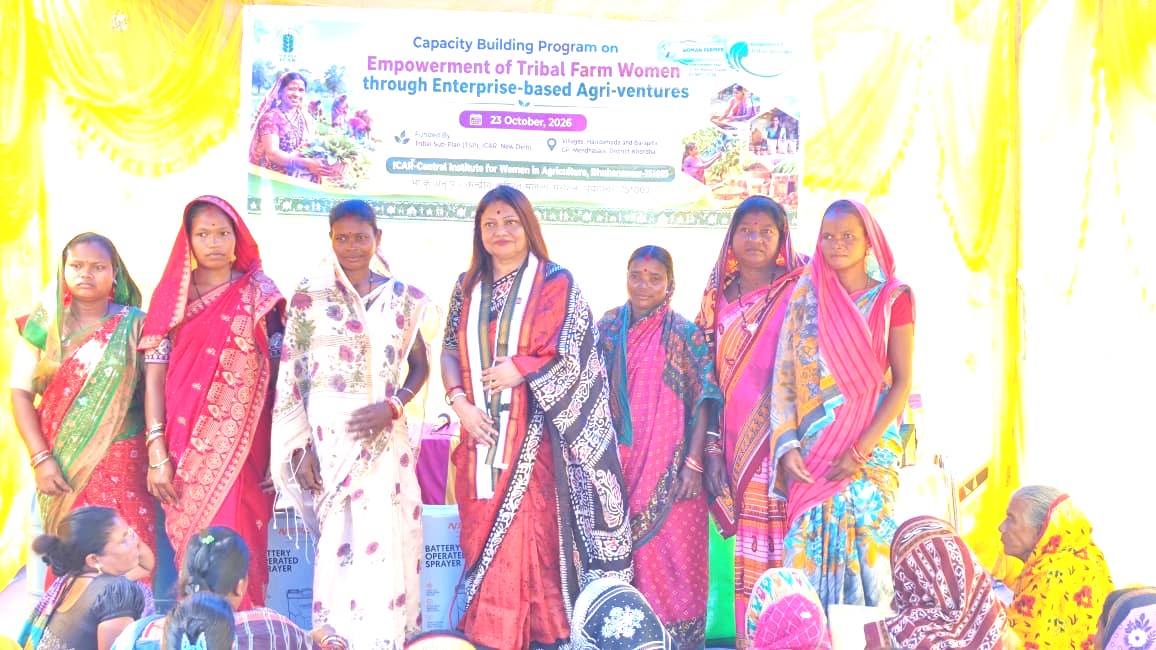
| The ICAR-Central Institute for Women in Agriculture (ICAR-CIWA), Bhubaneswar, organized a Capacity Building Programme under the Tribal Sub-Plan (TSP) on “Empowerment of Tribal Farm Women through Enterprise-Based Agri-Ventures” for 60 tribal farmwomen at Haridamada and Barapita villages of Mendhasala Gram Panchayat, Khordha district, on 23 October 2026. |
| The programme aimed to strengthen the knowledge, confidence, group-based enterprise management skills and livelihood opportunities of tribal women farmers. It also sought to build awareness of enterprise-based agricultural and allied activities, value addition, group formation, book-keeping and a market-oriented approach to farming./td> |
| The training began with an introductory session and a participatory exercise to understand the needs, expectations and perceptions of the women regarding agriculture, allied sectors and enterprise-based activities. This helped align the training content with the participants’ own priorities and ground realities. The importance of Self-Help Groups (SHGs) and collective action was discussed in detail. Resource persons explained how working in groups helps women pool resources, form enterprises, procure inputs at lower cost, add value to their produce, establish market linkages and secure better prices. The women were also made aware of the substantially higher income potential of processing, packaging and marketing their produce compared with selling it as a raw commodity. Economic self-reliance was presented as the foundation for women’s greater participation in family decision-making and in society. |
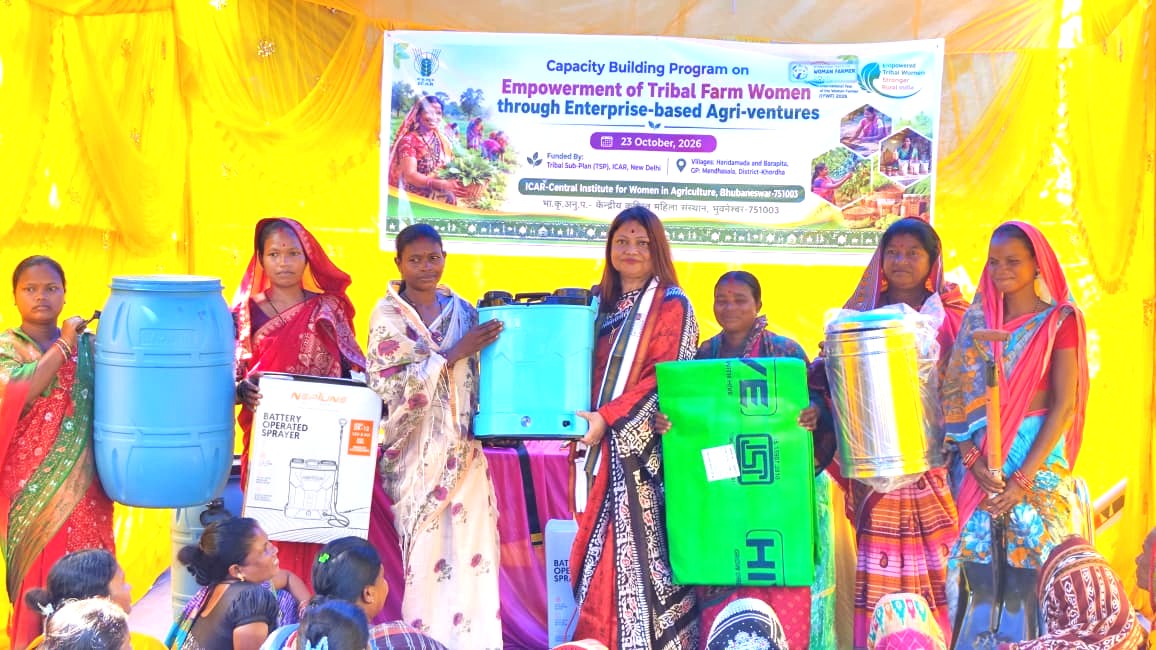
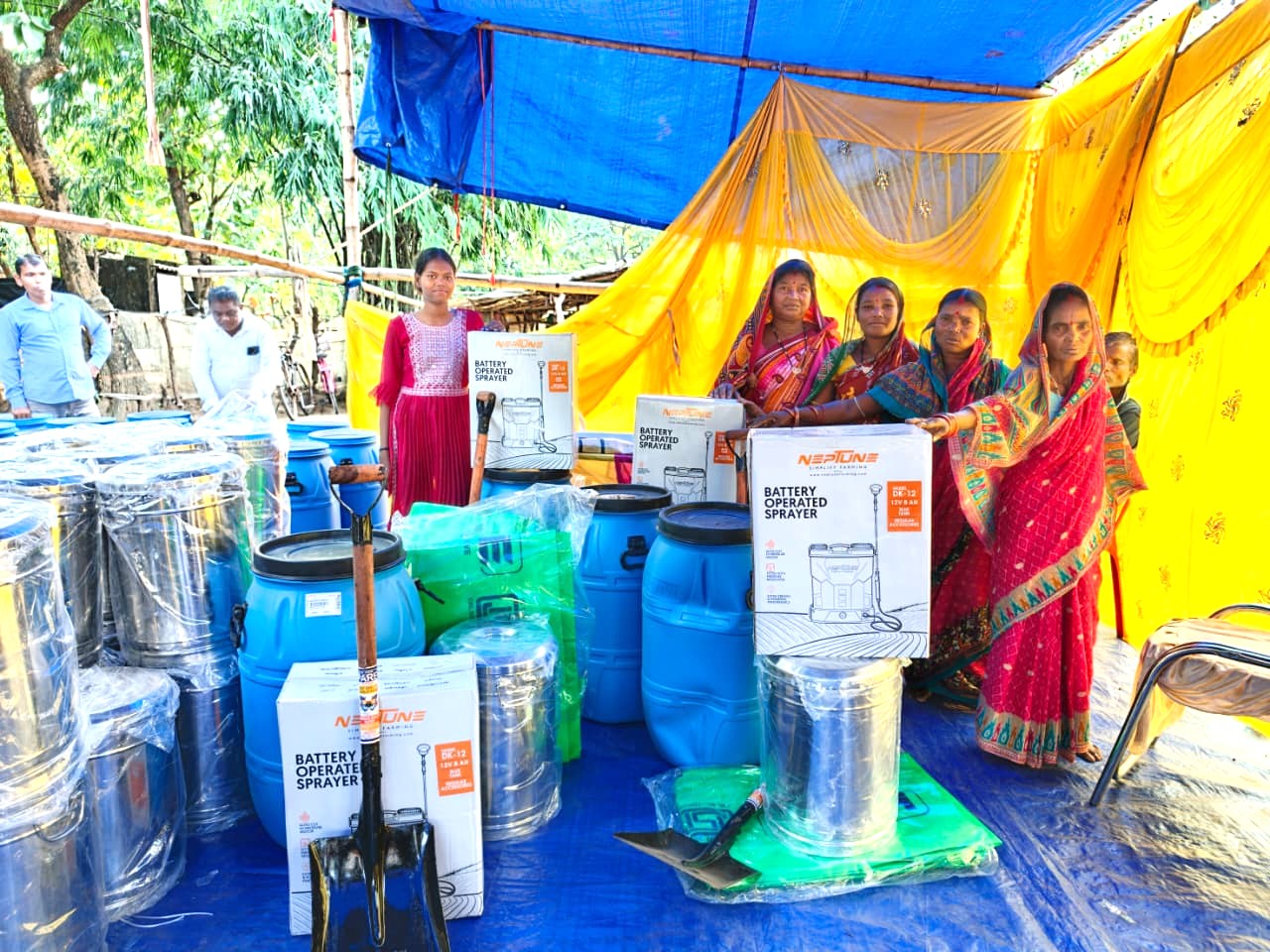
| Through lively and interactive discussions, the participants gained practical knowledge of climate-resilient and sustainable agricultural practices that support long-term farm profitability and environmental stewardship. Officials and representatives of various line departments attended the programme and appreciated the active participation and enthusiasm shown by the women. As part of the demonstration component, 60 vermibeds were distributed, one to each participating woman farmer, enabling them to begin on-farm vermicompost production. This will reduce dependence on external inputs, improve soil health and create an additional income opportunity through the sale of vermicompost. |
| The programme was coordinated by Dr. Lipi Das, Principal Scientist (Agricultural Extension), and Mr. Atul Chetan Hemrom of ICAR-CIWA. Its successful conclusion marks an important step towards helping tribal women farmers explore sustainable, enterprise-based and income-generating livelihoods, while strengthening their role in agriculture and the rural economy. |
 |
 |
 |
 |
